In short, a CanSat is a miniaturized satellite designed to fit inside the volume of a standard soda can, 330 ml. It’s used mainly for education and competitions to simulate real satellite missions in a simpler, lower-cost way.
Citing the official ESERO website:
A CanSat is a miniature replica of a real satellite, scaled down to fit inside a standard soft drink can (330 ml). The challenge for students is to integrate all the essential subsystems of a satellite—such as power supply, communications, and data collection systems—into such a small space.
This whole competition begins with forming a group of six students, sketching a rough plan, and coming up with a creative secondary mission. For us, this was the comparison of inside and outside sensor’s measurements.
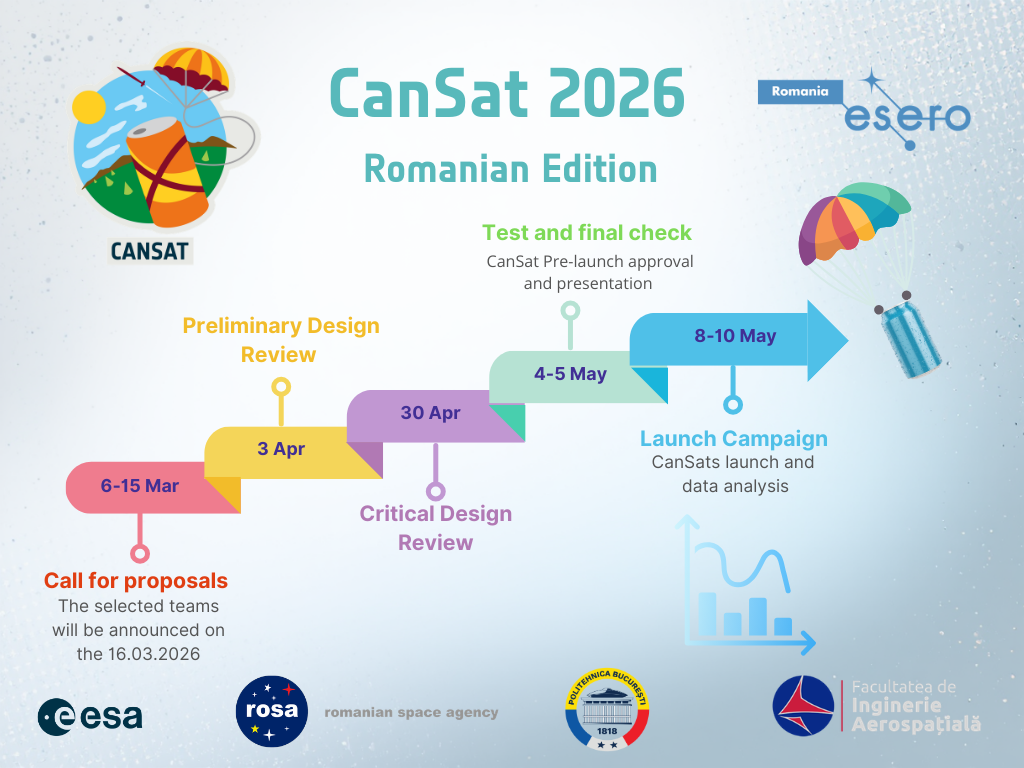
When the competition gets announced, each team has to submit their proposal. Basically the rough plan, but way more refined. If this proposal is well made, and the team’s plan is proper, they get accepted into the competition!
After getting accepted, the teams get to quick work, putting together a prototype, then the Preliminary Design Review (PDR for short). Luckily for us, we got some extra time to finish putting ours together because of the Easter break.
Then comes the Critical Design Review. At this stage, every plan needs to be finalized. From here to the launch campaign, only final testing can be done. Here, the teams can prepare for the final presentation, or continue to advertise themselves.
The launch campaign comes after the interlude. Teams finally set up their CanSats and prepare their laptops, phones and cameras for the takeoff. After the whole ceremony ends, they each present their final conclusion and the success of their secondary mission.